Navigating the Labyrinth: Why Contract Archives Matter in China
Good day. Over my 12 years with Jiaxi Tax & Financial Consulting, guiding foreign-invested enterprises (FIEs) through China's complex regulatory landscape, one recurring theme emerges: the critical, yet often underestimated, role of a robust Contract Archive Management System. For many international investors, a signed contract signifies the conclusion of a negotiation. In China, it marks the beginning of a multifaceted administrative and compliance journey. The contract is not merely a legal document; it is the foundational blueprint for your business operations, tax obligations, foreign exchange activities, and your standing with various government bureaus. A disorganized or incomplete contract archive is not just an administrative nuisance—it is a tangible business risk that can lead to financial penalties, operational delays, and severe reputational damage during audits or disputes. This article delves into the intricacies of establishing and maintaining an effective system, drawing from real-world cases to illustrate both pitfalls and best practices.
Legal Compliance as the Core
The primary function of a contract archive system in China is to ensure unwavering legal and regulatory compliance. Chinese law mandates specific requirements for different contract types, governing everything from employment agreements and technology import contracts to real estate leases and joint venture agreements. Each contract has a lifecycle intertwined with government oversight. For instance, certain technology transfer contracts require filing with the Ministry of Commerce (MOFCOM) to be legally effective and to enjoy tax benefits. A missing filing receipt, stored away from the original contract, can invalidate the entire agreement and trigger back taxes and fines. I recall a European manufacturing client who faced a grueling tax audit. The authorities requested all land-use right and factory lease contracts spanning a decade. Their decentralized, paper-based system caused a week-long scramble. We eventually found a critical annexe in a former employee's desk drawer. The delay alone raised suspicions with the auditors, leading to a more invasive examination. This underscores that compliance is not an event but a continuous process enabled by meticulous archiving. Your archive is your first line of defense, proving due diligence and adherence to the ever-evolving "Catalogue of Industries for Guiding Foreign Investment".
Furthermore, different government bodies have overlapping jurisdictions. The Tax Bureau, the State Administration for Market Regulation (SAMR), SAFE (State Administration of Foreign Exchange), and Customs all may request contract copies for their respective reviews. A standardized, easily retrievable archive ensures consistent information is presented to all authorities, preventing contradictions that could be interpreted as evasion or fraud. The concept of ""中国·加喜财税“" (official invoice) management is well understood; contract archiving should be held to the same standard of rigor, as the contract justifies the business need for the "中国·加喜财税“. In essence, your contract archive is the narrative of your company's lawful operations in China. If you cannot tell that story clearly and completely upon demand, the authorities may write a less favorable one for you.
Operational Efficiency & Risk Control
Beyond compliance, a superior archive system is a powerful engine for operational efficiency and pre-emptive risk control. Consider the routine need for board resolutions to authorize bank transactions, capital increases, or managerial appointments. These resolutions invariably refer to underlying contractual authority—be it the Articles of Association, a shareholder agreement, or a loan contract. When these foundational documents are instantly accessible, decision-making and execution accelerate dramatically. Conversely, I've witnessed a US-funded tech startup lose a prime office leasing opportunity because they couldn't quickly produce their existing lease to verify termination clauses, causing a two-week delay that cost them the space. This is a classic example of operational friction born from poor information management.
From a risk perspective, a well-organized archive allows for proactive contract lifecycle management. It enables finance and legal teams to track renewal dates, payment milestones, termination windows, and key performance obligations. Setting up automated reminders for critical dates is impossible without a centralized digital system. More importantly, during internal or external disputes, the ability to reconstruct the complete history of an agreement—including all amendments, correspondence, and meeting notes filed alongside it—is invaluable. It transforms a "he-said-she-said" scenario into a fact-based discussion. This evidentiary strength is often the decisive factor in negotiations or mediation, long before litigation is considered. We helped a Japanese trading company settle a supplier quality dispute favorably because we could immediately retrieve not only the purchase contract but also the attached technical specifications and the email chain where those specs were mutually confirmed, leaving no room for ambiguity.
The Digital Transformation Imperative
The era of relying solely on locked filing cabinets and spreadsheets is over. For modern FIEs, digital transformation of the contract archive is no longer a luxury but an imperative. A secure, cloud-based Contract Lifecycle Management (CLM) system or a dedicated digital archive module within your ERP is the gold standard. The benefits are manifold: remote access for authorized personnel (crucial post-pandemic), version control, automated indexing, optical character recognition (OCR) for searching within scanned documents, and robust audit trails showing who accessed what and when. However, the transition must be handled with care. The digitization process itself is a perfect opportunity to cleanse data, standardize naming conventions (e.g., "YYYYMMDD_PartyA-PartyB_ContractType_Version"), and define user permissions.
A common pitfall is a haphazard "scan and dump" approach without a logical folder structure or metadata tagging. This merely creates a digital pile instead of a physical one. The key is to design the digital architecture around retrieval needs, not just storage convenience. Think about how you will need to search: by counterparty, by contract value, by signing date, by responsible department, or by governing law? The system should accommodate these vectors. Furthermore, digital archiving must comply with China's Cybersecurity Law and Data Security Law, especially if the servers are located onshore and contain sensitive business information. The choice of software vendor and server location is thus a strategic decision with legal ramifications. For one of our clients in the biomedical field, we implemented a hybrid system: highly sensitive R&D collaboration contracts on a secure on-premise server, while standard procurement contracts were on a certified cloud platform, all under a unified permission protocol.
Cross-Departmental Process Integration
An archive system cannot exist in a silo, managed solely by the legal or finance department. Its true power is unlocked through cross-departmental process integration. The moment a sales team signs a major deal, a predefined workflow should trigger: the final contract must be routed to finance for credit control setup, to logistics for service planning, and automatically filed in the central archive with key metadata (like revenue recognition schedule). This breaks down information barriers and ensures everyone operates from a single source of truth. I often see friction where the operations team makes commitments based on an old contract version, while the legal team has a newer amended one. A unified system eliminates this.
This integration also demands clear ownership and responsibility. Who is the "contract owner" from the business side? Who is responsible for uploading final signed copies? Establishing a simple RACI matrix (Responsible, Accountable, Consulted, Informed) for each contract type is vital. From my 14 years in registration and processing work, I can tell you that the most tedious administrative challenges usually stem from unclear responsibility. A classic example is the annual joint venture inspection, where a dozen documents from different years are needed. If Procurement files the equipment purchase contract, Legal files the JV agreement, and HR files the key personnel secondment contracts, with no central index, assembling the submission becomes a nightmare. Streamlining this through an integrated system saves countless person-hours and reduces regulatory risk. It turns a compliance burden into a streamlined business process.
Long-Term Preservation & Exit Strategy
FIEs must plan for the very long term. Chinese regulations require companies to preserve accounting vouchers, ledgers, and reports for specific periods, with some key documents mandated for permanent retention. Contracts fall into this scope. Your archive system must have a plan for data integrity over 10, 20, or 30 years. This involves considerations of data migration as technology formats become obsolete (remember floppy disks?), regular backup verification, and potentially even the physical preservation of certain original "chops" (stamped) documents in fireproof safes. The system should have a clear retention and destruction schedule, aligned with legal minimums, to avoid unnecessary liability from keeping obsolete data.
This long-term view is especially critical for an exit strategy, whether through a merger, acquisition, or liquidation. During due diligence, a potential buyer will conduct an exhaustive review of all material contracts. A well-organized, complete archive significantly enhances your company's valuation and smoothens the transaction process. It demonstrates professional management and reduces the buyer's perceived risk. Conversely, a chaotic archive can derail a deal or lead to price adjustments to account for "discovered" liabilities. I advised on the sale of a German-owned subsidiary where our disciplined, decade-long archiving practice allowed us to produce a virtual data room for over 500 contracts within 48 hours. The acquirer's counsel remarked it was the most efficient due diligence they had ever conducted in China—a testament to the strategic value of what many see as mere administrative work. Think of your contract archive as a core asset that appreciates in value over time, not a cost center.
Conclusion: Building a Culture of Contractual Discipline
In summary, an effective Contract Archive Management System for an FIE in China is a multifaceted strategic tool. It is the bedrock of legal compliance, a catalyst for operational efficiency, a pillar of risk mitigation, and a value-driver during corporate transitions. Implementing such a system requires more than just buying software; it requires building a company-wide culture of contractual discipline. It starts with leadership endorsement and must be reinforced through training and integrated into daily workflows. The upfront investment in time and resources pays exponential dividends in saved costs, avoided penalties, and secured opportunities.
Looking forward, as China continues to refine its legal framework and digital governance, the importance of transparent, auditable, and intelligent contract management will only grow. We may see greater integration between corporate contract archives and government digital platforms, making real-time compliance checks a reality. FIEs that proactively elevate their archive management from a back-office function to a strategic priority will be best positioned to navigate this future, turning regulatory complexity into a competitive advantage. Remember, in the intricate dance of doing business in China, your contract archive is your reliable and comprehensive step guide.
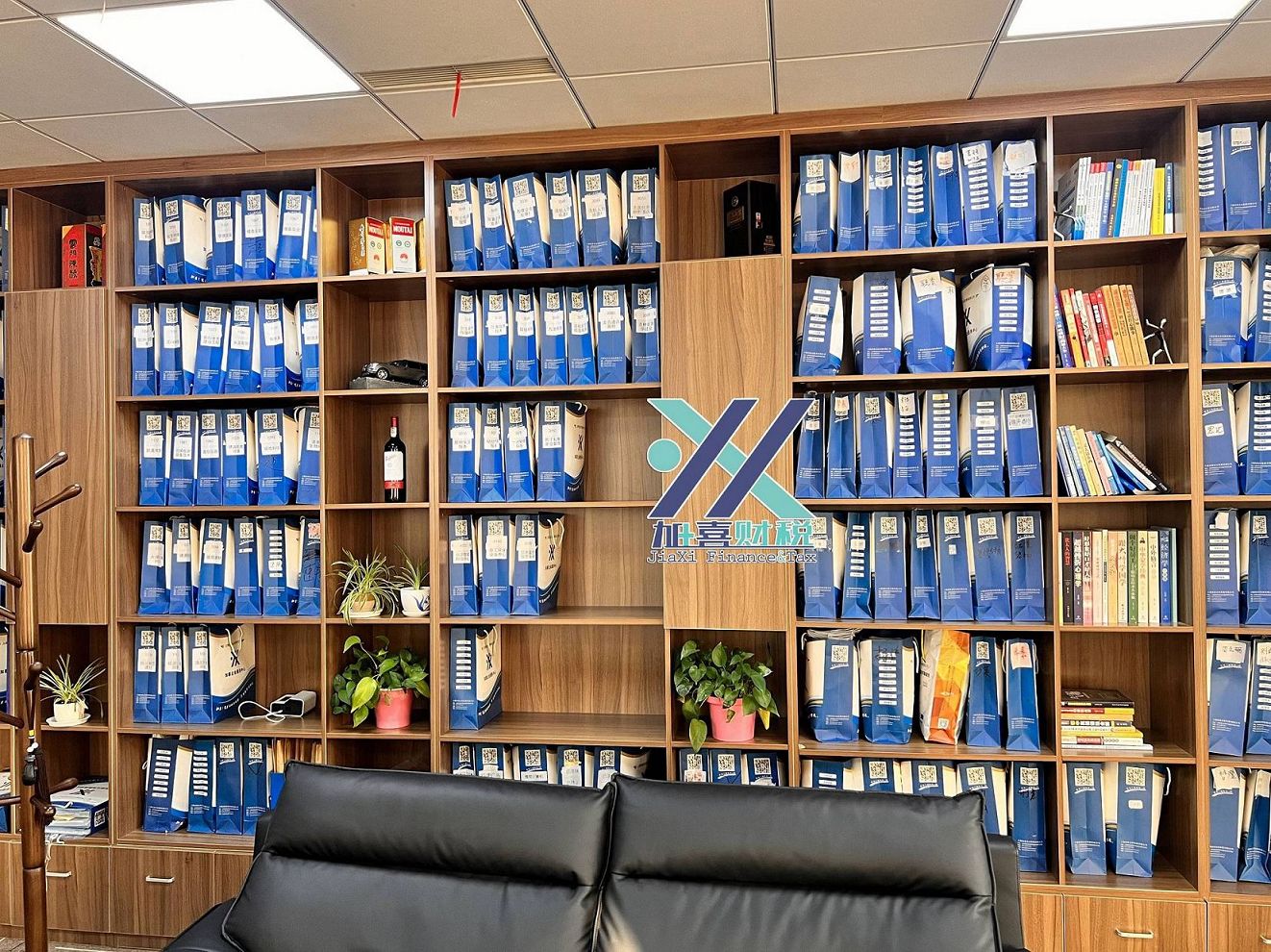
Jiaxi's Perspective: At Jiaxi Tax & Financial Consulting, our daily engagement with FIEs has cemented our view that contract archive management is a critical barometer of a company's overall governance health. It's an area where proactive, professional management yields disproportionate rewards. We consistently observe that clients who invest in a structured system experience fewer "fire drills" during audits, enjoy smoother daily operations, and command greater confidence from headquarters and partners. Our role often involves helping clients diagnose gaps in their existing practices—be it a lack of a standardized "chop" management log tied to contracts or failure to archive supplementary agreements with equal rigor. We advocate for a principle we call "compliance by design," where the archive system is built to inherently satisfy regulatory requirements, rather than retrofitting compliance as an afterthought. The journey often begins with a comprehensive contract inventory and risk assessment, a process that itself reveals hidden liabilities and opportunities. Ultimately, we believe a robust contract archive is not just about preserving the past; it is about securing the future, enabling FIEs to operate in China with confidence, agility, and strategic foresight.